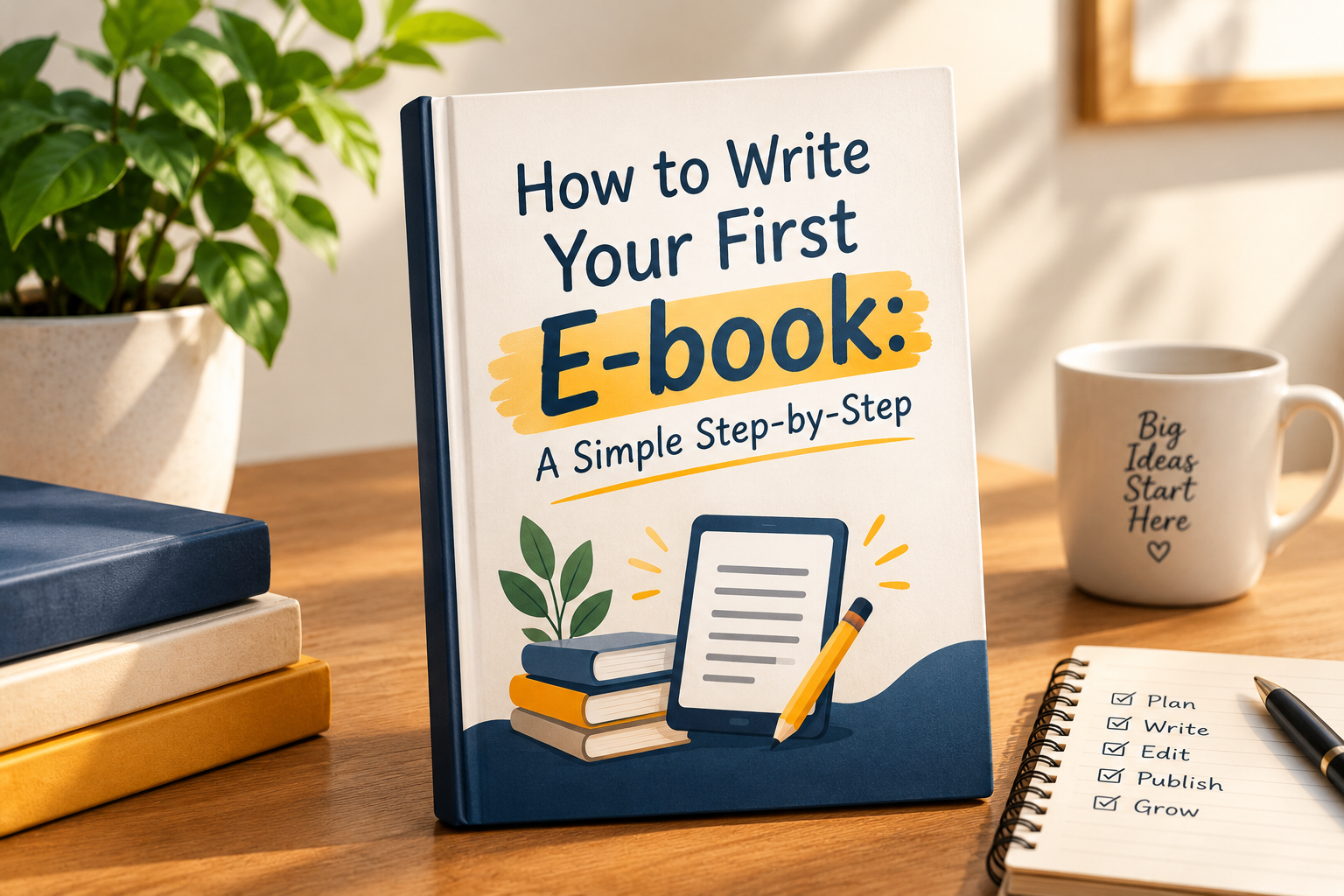
How to Write Your First E-book: A Simple Step-by-Step
Writing an e-book for the first time may seem difficult, especially if you do not have any previous writing experience. However, with the right planning and a clear process, anyone can create a useful e-book. Learning how to Write Your First E-book starts with choosing a topic, understanding your audience, organizing your ideas, and turning them into helpful content. Whether you want to share your knowledge, build your online presence, or sell digital products, this beginner-friendly guide will help you get started.
In this article, you will learn how to plan, write, edit, design, and publish your first e-book step by step.
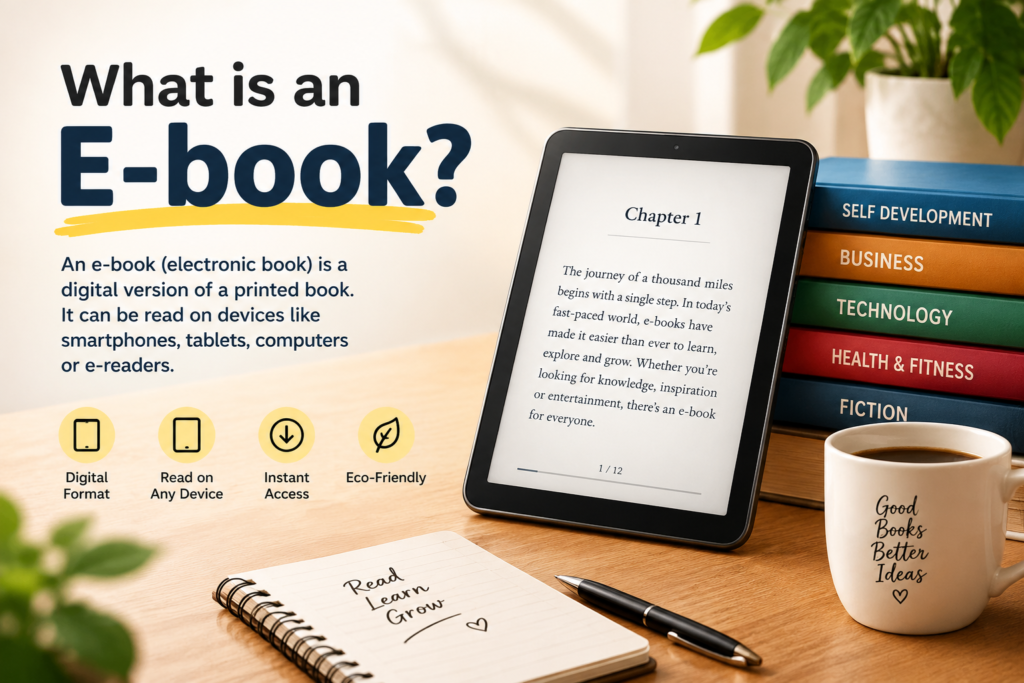
What Is an E-book?
An e-book, or electronic book, is a digital publication that readers can access on devices such as smartphones, tablets, laptops, and e-book readers. Unlike printed books, e-books can be distributed online without the need for physical printing.
E-books cover many topics, including education, business, digital marketing, personal development, cooking, and technology. They are popular because they are easy to distribute, convenient to read, and often less expensive to produce than traditional books.
For beginners, creating an e-book can also be an opportunity to share knowledge, attract an audience, or develop a digital product.
Step 1: Choose the Right Topic for Your E-book
The first step in learning how to write your first e-book is selecting a topic that interests you and provides value to readers.
Start by identifying subjects you understand or want to research. Your topic does not need to be complicated. A simple guide that solves a specific problem can be more useful than a broad book covering too many subjects.
For example, you could write about:
Digital marketing for beginners
How to improve productivity
Basic SEO techniques
Personal budgeting tips
How to start a blog
Beginner-friendly graphic design
Choose a topic that matches your knowledge and your audience’s needs. Research existing books and articles to understand what information is already available and how you can make your ebook more helpful.
Step 2: Identify Your Target Audience
Before writing, decide who will read your e-book. Understanding your audience helps you choose the right language, examples, and level of detail.
Ask yourself a few questions:
Who will benefit from this e-book?
Are they beginners or experienced readers?
What problems are they trying to solve?
What information do they need most?
For example, if your e-book is about SEO, your target audience might be students, bloggers, or small business owners who want to improve their website rankings.
When you understand your readers, you can create content that answers their questions and provides practical solutions.
Step 3: Create an E-book Outline
An outline is a plan that organizes your ideas before you begin writing. It helps you stay focused and ensures that your e-book follows a logical structure.
Start by writing down the main topics you want to cover. Then divide each topic into smaller sections or chapters.
For example, an e-book about digital marketing could include:
Introduction to digital marketing
Understanding your target audience
Search engine optimization basics
Social media marketing
Content creation strategies
Measuring marketing results
Final tips and resources
Your outline does not need to be perfect at the beginning. You can change it as your ideas develop. The goal is to create a clear direction for your writing.
Step 4: Start Writing Your First Draft
Once your outline is ready, begin writing your content section by section. Do not worry about making every sentence perfect during the first draft. Focus on explaining your ideas clearly.
If you are wondering how to write your first e-book without feeling overwhelmed, start with small daily goals. For example, you could write 300 to 500 words each day, depending on your schedule.
Use simple language, short paragraphs, and relevant examples. Avoid adding unnecessary information just to increase the word count.
You can also use writing tools to organize ideas, check grammar, and improve readability. AI tools can help you brainstorm topics or develop an outline, but review all generated content for accuracy and originality.
Step 5: Edit and Proofread Your Content
After completing your first draft, take a break before reviewing it. A fresh perspective can help you identify mistakes and unclear explanations.
During editing, focus on the following areas:
Grammar and spelling
Sentence clarity
Repeated information
Paragraph structure
Accuracy of facts and examples
Consistency between chapters
Read your e-book carefully and make sure each section contributes to the reader’s understanding.
You can use grammar-checking software as an additional review tool. However, do not depend entirely on automated suggestions. Read the content yourself and verify important claims using reliable sources.
Step 6: Design a Professional E-book
A well-designed e-book is easier to read and creates a positive impression. You do not need advanced graphic design skills to create a clean layout.
Tools such as Canva and Google Docs can help you prepare your e-book. Choose readable fonts, consistent headings, appropriate spacing, and a simple color palette.
Your e-book should include:
An attractive cover page
A clear title and author name
A table of contents
Organized chapters and headings
Relevant images or illustrations
Page numbers where appropriate
A conclusion and useful resources
Avoid overcrowding pages with too many colors, graphics, or different font styles. Keep the design consistent throughout the book.
Step 7: Choose the Right E-book Format
Before publishing, select a format suitable for your readers and distribution platform.
PDF: A practical choice for downloadable guides, workbooks, and lead magnets because it generally preserves the page layout.
EPUB: Commonly used for e-books that need to adapt to different screen sizes and e-book readers.
DOCX: Useful when you want an editable working document before converting it into a final format.
For a first e-book that you plan to share through a website, PDF is often a convenient starting point. Check the final file on both desktop and mobile devices to ensure that the text and images display correctly.
Step 8: Publish and Promote Your E-book
After finishing the content and design, decide how readers will access your e-book.
You can publish it on your website, distribute it through an e-book marketplace, or offer it as a free resource to attract subscribers.
If you want to promote your e-book, consider these strategies:
Share useful excerpts on social media.
Write blog posts related to your e-book topic.
Create short videos explaining key lessons.
Add an e-book download link to relevant website pages.
Build an email list and share updates with interested readers.
If you plan to sell your e-book, research your audience and competing products before setting a price. Make sure your sales page clearly explains what readers will learn and why the e-book is useful.
Common Mistakes to Avoid When Writing an E-book
Beginners sometimes choose topics that are too broad, skip the editing process, or focus more on design than content quality.
Other common mistakes include copying information without proper attribution, using unsupported claims, and publishing without checking the final file.
To avoid these problems, keep your topic focused, verify your information, respect copyright, and test your e-book before sharing it publicly.
Remember that a helpful e-book does not need to be extremely long. It needs to solve a problem, explain its ideas clearly, and give readers something valuable to apply.
Conclusion
Learning How to Write Your First E-book becomes much easier when you divide the process into manageable steps. Start with a useful topic, understand your target audience, prepare an outline, and write your first draft. Then edit the content, design a professional layout, choose the right file format, and publish your e-book.
You do not need to be an expert writer to begin. Consistent practice, careful research, and a focus on your readers can help you create a valuable digital book.
Start with one clear idea, take the first step today, and improve your e-book as you progress. Your first e-book can become a foundation for future writing projects, audience growth, or a digital business.